All projects

TIA

The Intelligent Anamnesis

A digital questionnaire that turns an orthopedic patient's answers into a picture a doctor can read before the consultation.

Client
TUM Venture Labs × TUM Sports Orthopedics
Role
Web developer and product designer
When
2023 – 2024
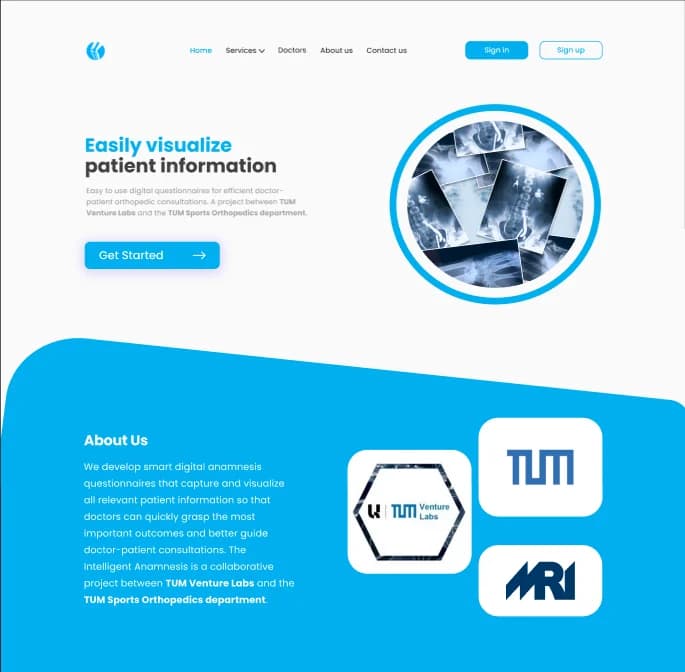
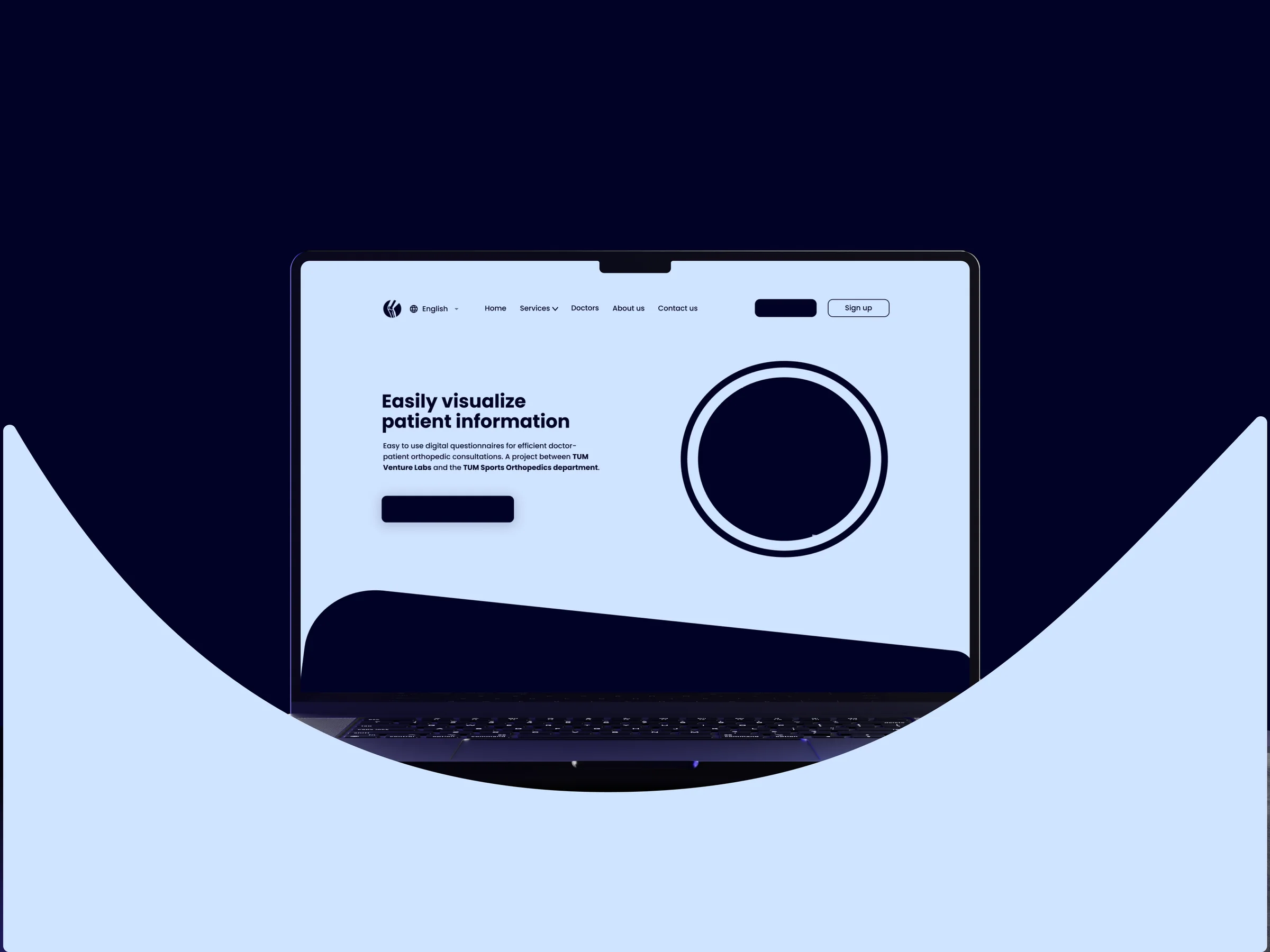
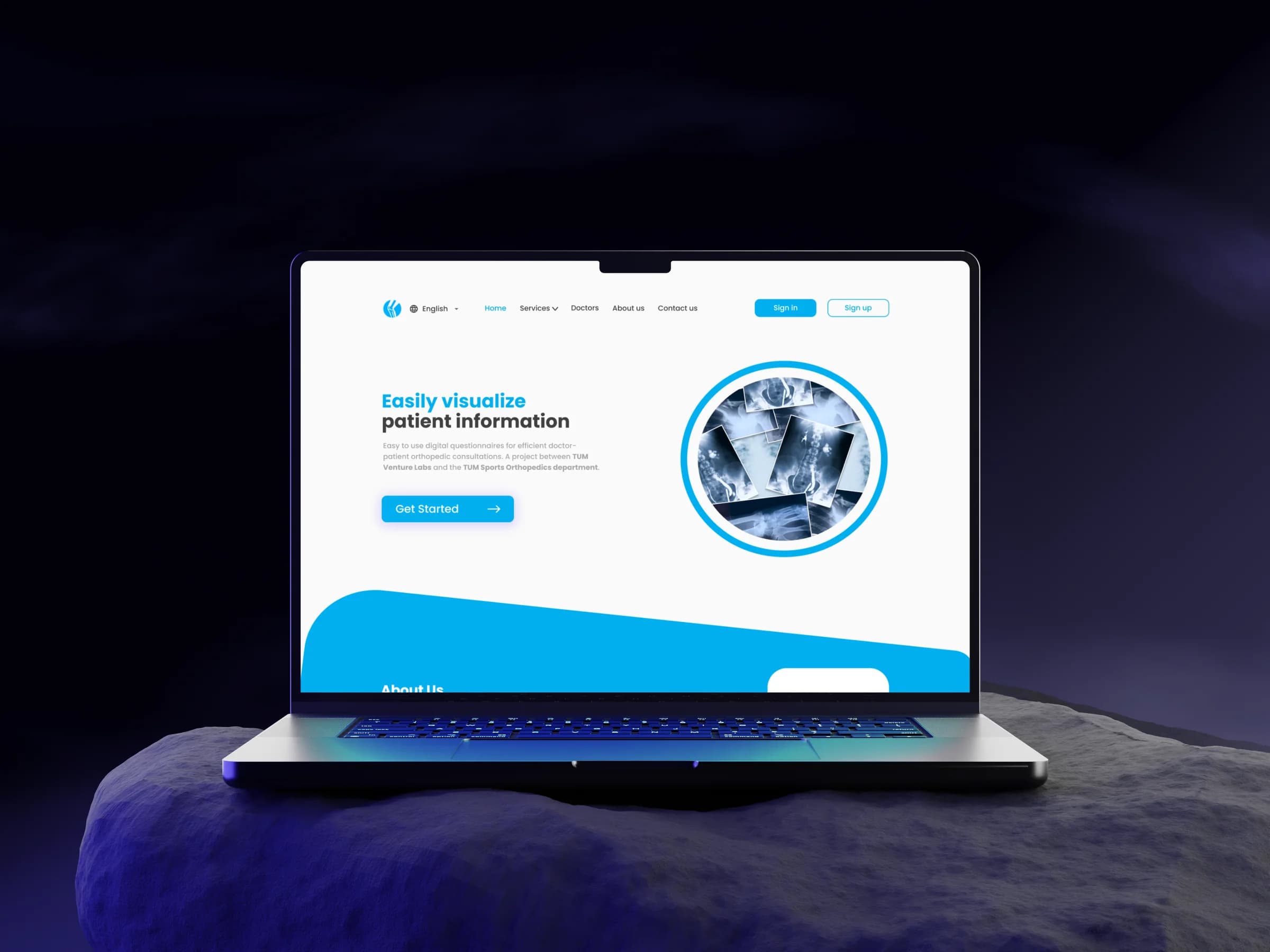
The TIA landing page on a laptop
  • React
  • Material UI
  • Supabase
  • PostgreSQL
  • Figma

What it is

Before an orthopedic consultation, doctors need the patient's history: where it hurts, since when, what has been tried. TIA collects that through a smart questionnaire and lays it out so the doctor can take it in at a glance.

It was a pilot between TUM Venture Labs and the Sports Orthopedics department at the Technical University of Munich, built for 500+ patients and their doctors.

My part

I was the only developer and also designed the product, working with the Master's and PhD students who led the research.

I built the questionnaire's medical logic, more than 100 questions and answers that branch on what the patient says, and the backend that stores it.

One question at a time

The problem. How do you collect a full orthopedic history from patients without a form that scares them off, and still hand the doctor something they can use in the room?

What I did.
  • Broke the history into single questions with a clear next step, so a patient only ever sees one thing to answer.
  • Encoded the medical logic: follow-up questions appear only when an earlier answer calls for them.

What changed. More than 100 questions and answers, with the branching the doctors asked for, in a flow a patient can finish on their own.

100+

questions with branching medical logic
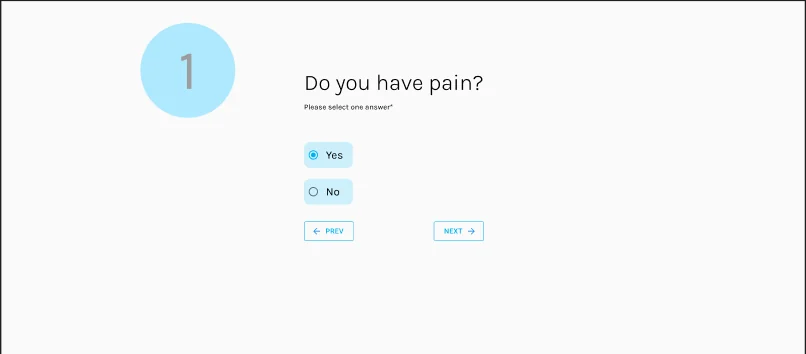
A TIA question step asking whether the patient has pain
One question per step.

Designed to ship

The problem. A pilot lives or dies on getting in front of patients, not on a bespoke look.

What I did.
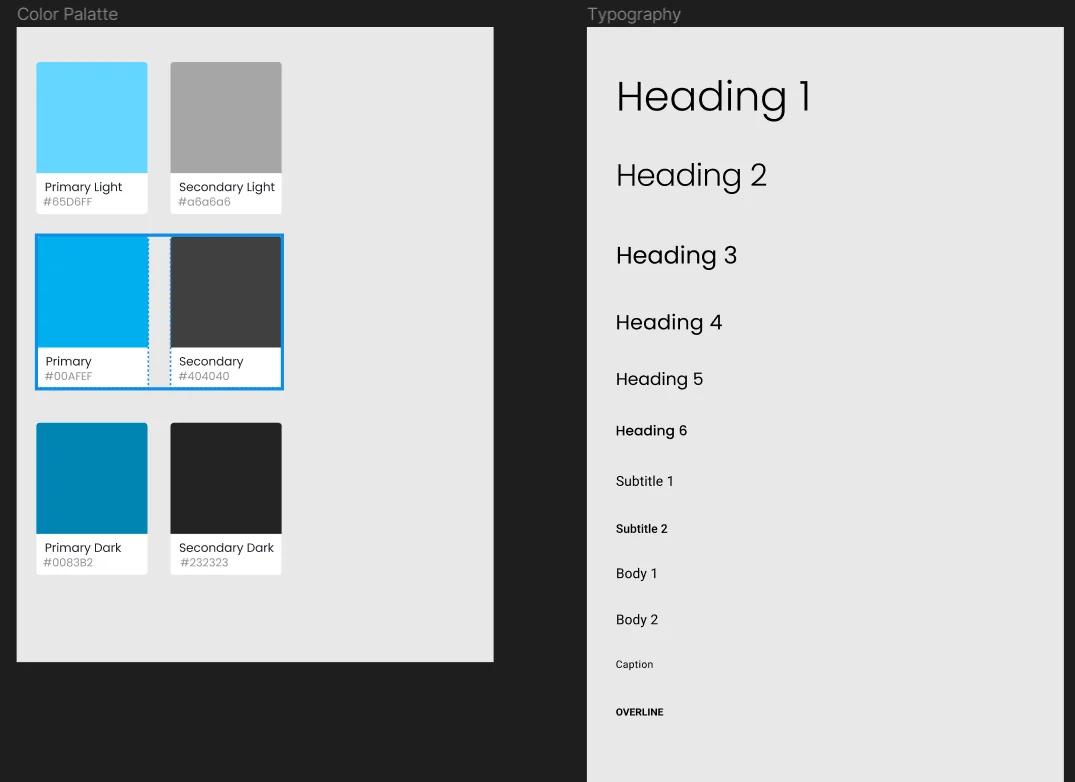
  • Designed in Figma on Material UI's components, with a small palette and type scale of our own.
  • Kept the interface as plain as possible so the team could test with patients early.

What changed. The design went from Figma to working screens fast, and stayed consistent because it was built from one component set.

TIA colour palette and type scale
The palette and type scale.

Built to be hosted by the hospital

The problem. The client wanted to be able to run TIA on its own servers.

What I did.
  • Built the frontend in React with a clean architecture, so screens, logic and data stay apart.
  • Chose Supabase on PostgreSQL for the backend because it is open source and can be self-hosted, and it kept development fast.

What changed. A working pilot, built solo over seven months, ready for 500+ patients and their doctors.

500+

patients the pilot was built for

The TIA landing page
The landing page.

Have a project in mind?

Tell me what you need built, web or mobile, design to backend. I will come back with a plan.

Hiring a software engineer?

I am open to full-time roles. Let’s talk about your team and the work.